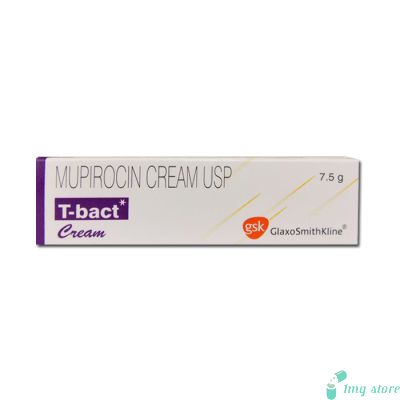
T-Bact Ointment (Mupirocin) | For Skin Infections, Impetigo & Bacterial Skin Infection Management
T-Bact Ointment is used to manage certain bacterial skin infections. It helps control bacterial growth and is commonly used for conditions such as impetigo, infected minor cuts, and other localized skin infections.


Product Overview
Understanding Mupirocin in T-Bact Ointment
Mupirocin belongs to a group of medicines called topical antibiotics. It works by interfering with bacterial protein production, which bacteria need to grow and multiply. By blocking an important bacterial enzyme called isoleucyl-tRNA synthetase, Mupirocin helps stop bacterial growth and, at suitable concentrations, can kill susceptible bacteria.
How Does T-Bact Ointment Work?
T-Bact Ointment works locally on the skin rather than acting throughout the body like many oral medicines. Mupirocin targets susceptible bacteria, particularly certain strains of Staphylococcus aureus and Streptococcus pyogenes.
Its antibacterial action helps reduce the bacterial activity associated with localized skin infections. The medicine is generally used for bacterial conditions affecting the outer layers of the skin.
Formulation and Application
T-Bact Ointment comes in a topical ointment formulation designed for application to the skin. Its consistency helps spread the medicine over a small affected area, allowing the active ingredient to work directly where it is needed.
The amount applied and duration of use depend on the skin condition and the instructions provided by a healthcare professional.
Role in Managing Bacterial Skin Conditions
Bacterial skin infections can develop when harmful bacteria enter the skin through small cuts, scratches, or damaged areas. These infections may cause redness, irritation, swelling, or localized skin changes.
Mupirocin helps manage susceptible bacterial infections by targeting the bacteria responsible for them. T-Bact Ointment is commonly used in the management of conditions such as impetigo and certain localised bacterial skin infections.
Key Product Information
| Brand Name | T-Bact Ointment |
| Active Ingredient | Mupirocin 2% w/w |
| Medicine Type | Topical antibiotic |
| Dosage Form | Ointment |
| Route of Application | Topical (skin) |
| Main Action | Inhibits the growth of susceptible bacteria |
Precautions
External Use Only
Apply T-Bact Ointment only to the affected skin area. Avoid swallowing the ointment or applying it inside the eyes, nose, or mouth unless specifically instructed.
Check for Allergies
Inform your healthcare professional if you have previously experienced an allergic reaction to Mupirocin or any other ingredient in the ointment.
Avoid Unnecessary Application
Use the ointment only on the affected area and follow the recommended application instructions.
Avoid Contact with Eyes
Take care when applying the ointment near the face. If it accidentally enters the eyes, rinse thoroughly with clean water.
Follow the Recommended Duration
Use T-Bact Ointment for the advised period. Avoid extending treatment or repeating applications without professional guidance.
Inform About Other Skin Products
Tell your healthcare professional if you are using other creams, ointments, or topical treatments on the same area.
Usage
How to Apply T-Bact Ointment
Clean the affected area
Gently wash the skin and pat it dry before application.
Apply a thin layer
Spread a small amount of T-Bact Ointment evenly over the affected area.
Wash your hands
Clean your hands before and after applying the ointment, unless treating your hands.
Follow the recommended schedule
Apply it as directed by your healthcare professional.
Keep the area clean
Avoid unnecessary touching or rubbing of the treated skin.
Important Application Tips
Use T-Bact Ointment only on the skin areas recommended by your healthcare professional. Avoid contact with the eyes, mouth, and other sensitive areas. Do not mix it with other topical products unless advised.
Uses
Impetigo
T-Bact Ointment helps manage impetigo, a bacterial skin infection that may cause red sores, blisters, and crusty patches.
Folliculitis
It may be used for certain cases of bacterial folliculitis, a condition involving inflammation or infection of hair follicles.
Localized Bacterial Skin Infections
Mupirocin helps control susceptible bacteria responsible for localized infections affecting the outer layers of the skin.
Infected Minor Cuts and Wounds
It may be recommended for minor cuts, scratches, and wounds when susceptible bacterial infection is present.
Infected Eczema
T-Bact Ointment may help manage bacterial infection affecting eczema-related skin areas when the infection is caused by susceptible bacteria.
Note: T-Bact Ointment is intended for specific bacterial skin infections and does not treat fungal or viral skin conditions.
Side Effects
Burning or Stinging Sensation
A mild burning or stinging feeling may occur at the application site, particularly after applying the ointment.
Skin Itching
Some people may notice itching around the treated area after using T-Bact Ointment.
Redness
The applied skin area may become slightly red or irritated during treatment.
Dryness
The skin may feel dry or develop mild discomfort around the application site.
Local Skin Irritation
Temporary irritation or tenderness may occur where the ointment is applied.
Less Common Effects
Skin Rash
Some individuals may develop a rash or unusual skin changes after application.
Allergic Skin Reaction
Rarely, an allergic reaction may cause swelling, severe itching, or a widespread rash. Stop using the ointment and seek medical attention if these symptoms occur.
When to Seek Medical Advice
If skin irritation becomes severe, symptoms worsen, or an unusual reaction develops, stop applying T-Bact Ointment and consult a healthcare professional.
FAQ’s
What is T-Bact Ointment used for?
T-Bact Ointment is used to manage certain bacterial skin infections, including impetigo and localized infected skin conditions.
What is the active ingredient in T-Bact Ointment?
T-Bact Ointment contains Mupirocin 2% w/w, a topical antibiotic.
How does T-Bact Ointment work?
It works by blocking bacterial protein production, helping stop the growth of susceptible bacteria.
Can T-Bact Ointment be applied to cuts?
It may be used for certain minor cuts with bacterial infection when recommended by a healthcare professional.
Is T-Bact Ointment suitable for external use?
Yes, it is formulated for external application to the skin.
How often should T-Bact Ointment be applied?
The application frequency depends on the skin condition and the instructions provided by a healthcare professional.
Can T-Bact Ointment be used on the face?
Use it on facial skin only when advised by a healthcare professional, and avoid contact with the eyes and mouth.
Interactions
Other Topical Medicines
Avoid applying other antibiotic creams, ointments, or skin treatments to the same area unless advised by a healthcare professional.
Medicated Skin Products
Using multiple medicated skin products together may cause irritation or affect how they work on the skin.
Other Antibiotic Treatments
Inform your healthcare professional if you are using other topical or oral antibiotics so they can review your treatment.
Skin Care Products
Avoid combining T-Bact Ointment with other creams or lotions on the same area without professional guidance.
Important: Always inform your healthcare professional about the medicines and topical products you use before starting T-Bact Ointment.
| Manufacturer | : | GlaxoSmithKline Pharmaceuticals Limited |
| Equivalent Brand | : | Bactroban |
| Generic Search | : | Mupirocin |
Latest Products